Define supported products and vehicles
We now have a basic openOBD function that reads the VIN using EOBD. To make life easier for the operator, you
may want to define which vehicles and/or products are supported by your function. Like the properties
defined in the previous step (version, name, etc.), you can also set the products and vehicles properties.
Info
It is not required to define products or vehicles that your function supports. When you do not provide vehicle or product ids it is assumed that your function is generic and supports all vehicles. You may continue to the next step and save product and vehicle definition for a later time.
Products
To indicate to the operator that the function supports a specific set of products, you can add the products property
to a function. This property contains a list of product ids, as can be found in the Partner API. The example below indicates that
the function only supports the Remote Diagnostic Support product (with id 6f0452ca-3756-11ec-80c7-02ae699427ce).
When the list is empty (or not specified), function is assumed to support all products.
from openobd import *
class EOBDReadVIN(OpenOBDFunction):

    id = "<unique function id>"
    signature = "<signature of the function generated by Jifeline Networks"
    version = "version information"
    name = "name of the script"
    description = "description of the script"
    products = [ "6f0452ca-3756-11ec-80c7-02ae699427ce" ]

    def run(self):
        logging.info("Everything is working fine!")
Vehicles
It is also possible to indicate support for specific vehicles. You can specify a list of supported vehicles in the vehicles
property. This property contains a list of ids, as can be found in the Partner API. An id can point to a make id, a model group id or a model id.
Combinations of those types are possible as well.
The example below indicates that the function supports Ford Fiesta "5690" and Ford Focus "5796" vehicles.
When the list is empty (or not specified), the function is assumed to support all vehicles.
from openobd import *
class EOBDReadVIN(OpenOBDFunction):

    id = "<unique function id>"
    signature = "<signature of the function generated by Jifeline Networks"
    version = "version information"
    name = "name of the script"
    description = "description of the script"
    vehicles = [ "5690", "5796" ]

    def run(self):
        logging.info("Everything is working fine!")
Browse the partner dashboard
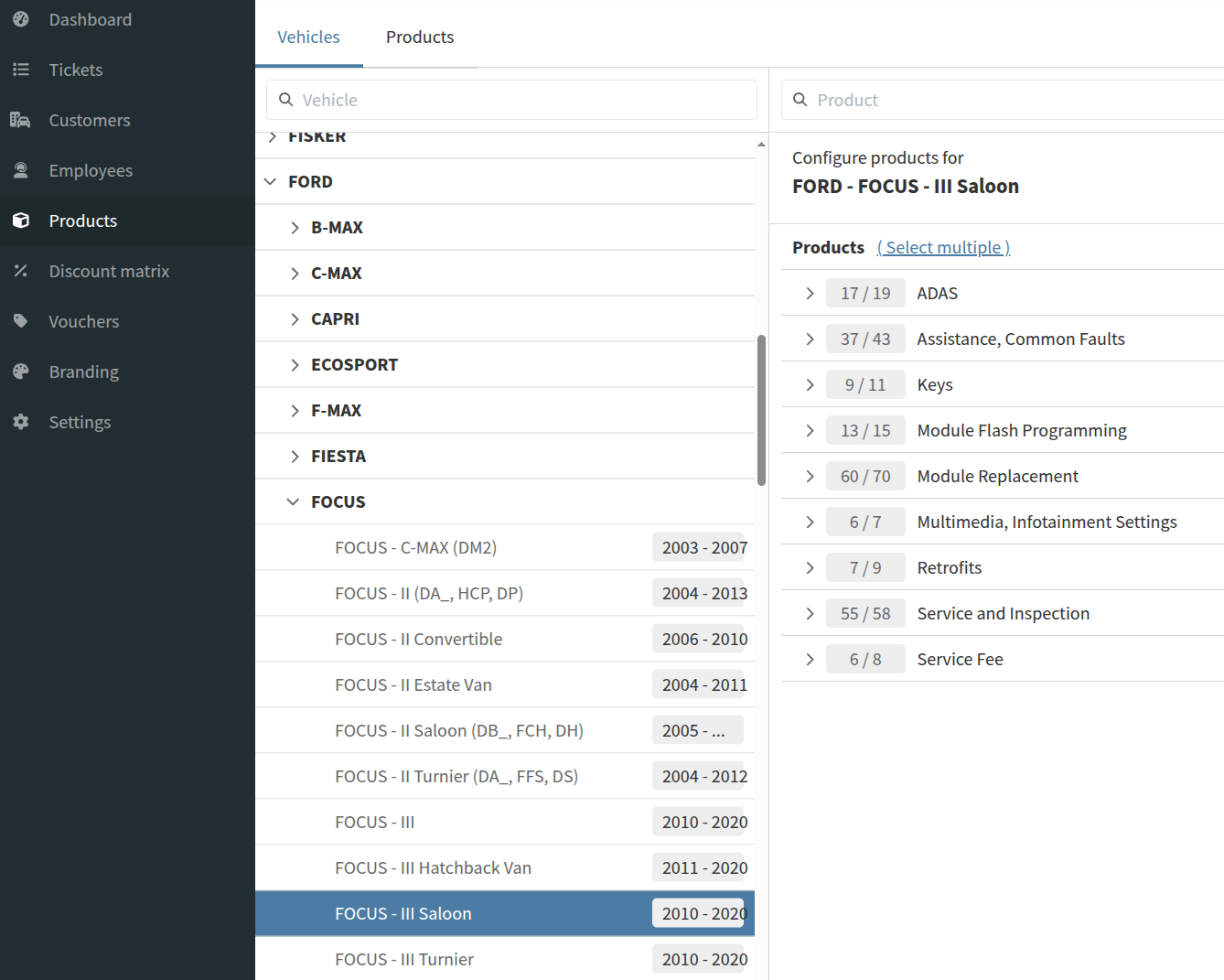
The Partner API is needed to recover the product and vehicle ids that are supported by your function. For easy browsing through the available products and vehicles you can use the partner dashboard.
Partner API
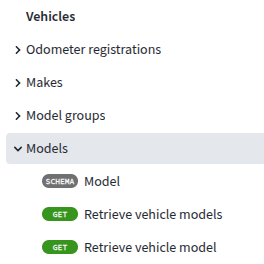
The Partner API can be used to retrieve the right vehicle ids.
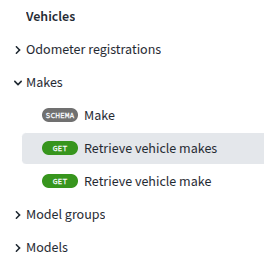
This call retrieves all the defined vehicle makes.
Example response entry:
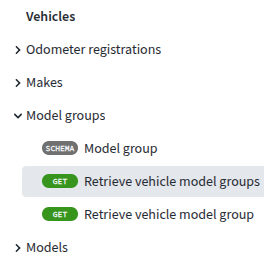
This call retrieves all the defined vehicle model groups.
Example response entry: